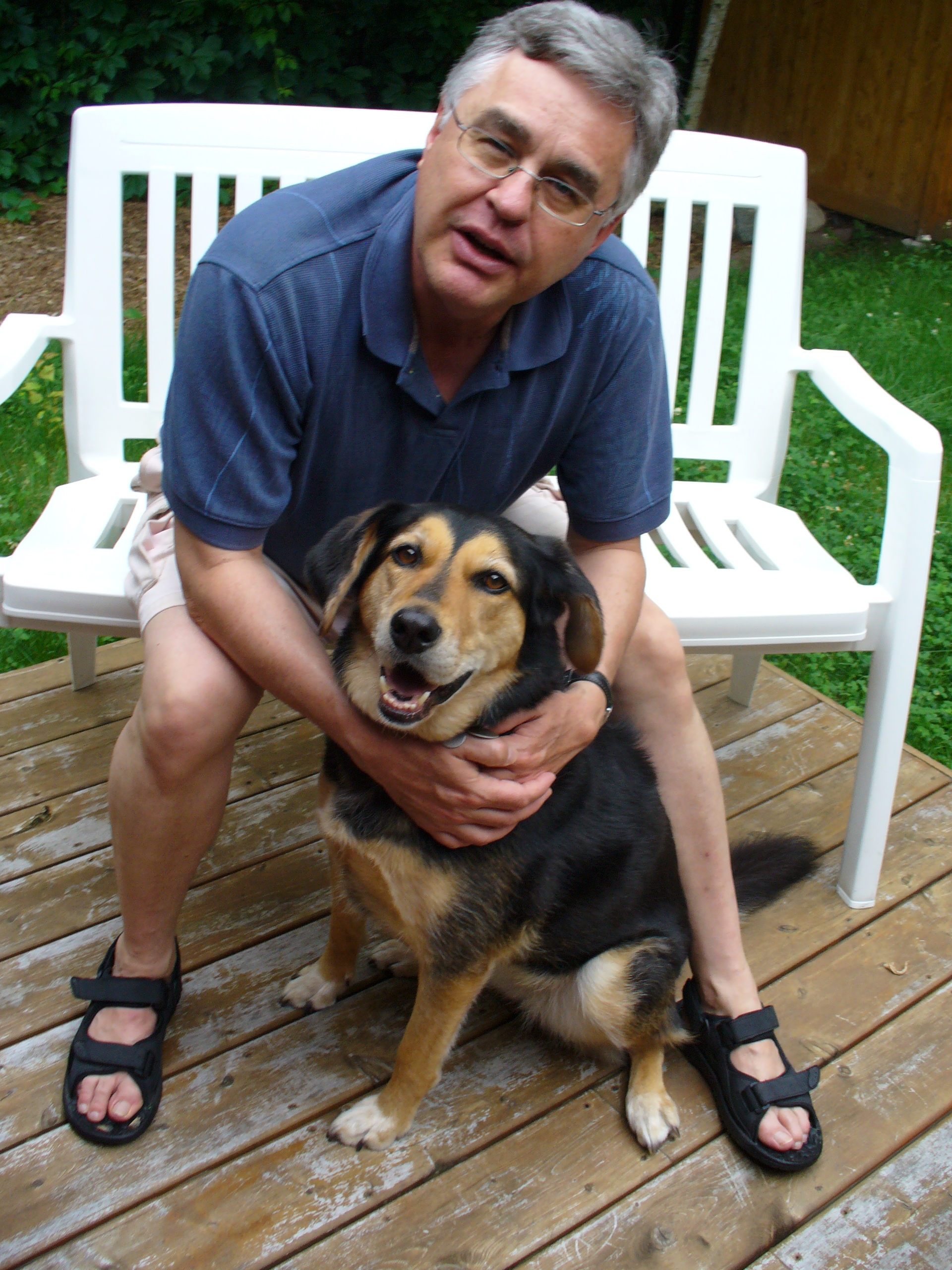
Excerpt 1
Knowing What We Don’t Know…
Forty-odd years ago, when I was a university student in Ottawa, I often had coffee at the Mayflower restaurant at Lisgar and Elgin. One morning, during rush hour, I left the restaurant and was standing on the corner with a group of people, waiting to cross. Directly across the street a man stepped off the sidewalk and started to cross toward us. As he moved, I prepared to follow his lead.
That reflex (to borrow certainty from someone who looks confident) shows up everywhere. It’s how crowds move. It’s how movements form. It’s also how we hand our mind over to belief because it feels safer than not knowing. One of the questions this book asks begins right there: when we don’t know, who or what leads us?
I didn’t know that a car was racing to beat the light from my left, hidden behind the heads of others. I assumed the light must have changed, and that assumption nearly cost me dearly. I stand about 5’8.” A stranger, who was well over six feet tall, stood directly to my right. He saw what I did not. Without hesitation, he placed a hand on my shoulder and stopped me from stepping into the path of the speeding car. He saw the danger and literally saved my life.
In the moment, I thought I was safe. I was wrong. My limited perspective left a gaping hole in my awareness. That blind spot concealed a real and impending danger. Ignorance is not bliss and not all our blind spots are accidental. Some we intentionally maintain because seeing clearly often demands a change in who we think we are, and we don’t always want to pay that price.
The impact would have been devastating. I was deep in thought when that stranger’s act of decency jolted me back to reality. In an instant, I grasped the gravity of what he had done. I stood there, stunned, and managed only a quiet “Thank you.” He replied, “You’re welcome,” and then vanished into the moving crowd.
Life is Bigger…
Our senses are fallible, and life sometimes pivots on a single moment. To be honest, we don’t fully appreciate the intricate unfolding of events around us, although we often believe we are in control. As the band R.E.M. famously said, life is bigger than you or me. No one person, no matter how knowledgeable, knows everything.
If your leaders claim otherwise, they’re mistaken. We all navigate reality using limited sensory information and conceptual models. We keep a version of the world in our heads that only partially mirrors it. There is always something that we are leaving out.
This book is partially about those blind spots, and how we make sense of the world despite them. Here is the problem: there is a fracture in the very ground of human understanding. Traditionally we’ve relied on institutions like religion and science to explain the world to us, but neither of them is complete.
Humanity has long wrestled with the challenge of defining its own nature. Are we primal mammals, or divine souls? In the modern age, our uncertainty has only deepened. The universe appears solid, but quantum physics assures us it is not. What we call “matter” is energy in another form. Our common-sense perception of solidity collides with the scientific understanding that reality is fundamentally unstable. Something foundational is unravelling: our trust in traditional ways of knowing what is real and true.
Some describe this unraveling as the arrival of a “post-truth” world. Certainty is central to truth, yet it is always elusive. In pursuit of certainty, we are urged to follow the science, or the scriptures, or the news source that best affirms our identity. We are told to trust experts, our gut, or God. But what happens when those authorities contradict one another? What happens when the ground of certainty itself begins to crumble?
The Enlightenment, the Renaissance, and the resulting Scientific Revolution gave us the false confidence to assert that believing in anything immaterial only reflected our own “magical thinking.” In its place, science proposed universal laws of nature. Well, you won’t find proclaimed doctrine here, or rigid rules to be followed. Nor is this book a manifesto, or a memoir. It is something else: a philosophical inquiry, stitched together with personal observation, pointing toward a deeper human truth within a relative world.
Everything now “depends” upon context. Into this vacuum rush competing dogmas (religious, political, and even scientific) with each staking its claim to ultimate authority. None, however, has perfect access to truth.
Our shift toward reason has been stabilizing, but it brings its own problems. I began this book because of a kind of dis-ease: the uncomfortable sense that something is off. And our imbalance is not only personal; it’s social. It shows up in how we live, but also in how we understand anything at all.
Reason, on its own, can’t explain the full scope of existence any more than dogma can. There remains an existential gap between what we know about material reality and what we experience as consciousness. Our current knowledge is neither satisfying nor complete, and so we continue to feel off balance.
Uncertainty is nothing new, but its reach has widened. The Internet has unleashed a daily tsunami of information, and it often feels as if we are waking up underwater. Yet we are not just drowning in facts—we are drowning in competing interpretations of those facts. Without a shared ground of truth, polarization hardens, trust erodes, and doubt becomes the common currency of our time. Our greatest crisis is not political, ecological, or even moral. It is more fundamental. It is a crisis of knowing.
The Consequences of Not Knowing
By “a crisis of knowing,” I mean this: we no longer share a reliable way to tell what’s true, who to trust, or when our own certainty is misleading, so we retreat into familiar ways of understanding—religious, scientific, or cultural—and we inherit their blind spots instead of letting reality inform us.
I thought I knew what was happening on that street corner years ago, but the stranger beside me knew better. He literally had a higher perspective. The take-away isn’t only that perspective matters. It’s also that we make unconscious assumptions, and wakening to these blind spots can profoundly impact our lives.
Sent by email. Unsubscribe anytime.
Why This book
Excerpt 2
Finding True North
As with a compass, truth always points to reality. Grasping the truth requires our humilty. This does not mean treating every claim as equally true. And it does not mean baptizing every feeling as evidence or surrendering your critical mind.
It means staying open about what we think we know. It means refusing two temptations at once: the temptation to declare that your knowledge is complete, and the temptation to declare that nothing beyond your current model could possibly be real.
If this book has argued anything, it is that closure is often the enemy of truth. Closure feels good, which is exactly why it can be dangerous. Reality isn’t obligated to be tidy. Meaning, conscience, love, and the felt reality of presence don’t behave like objects we can weigh or measure, but that doesn’t make them unreal.
What Lived Experience Can and Cannot Do
Lived experience is not “I felt it, therefore it’s true.” Understood that way, subjectivity collapses into solipsism. A better stance is simpler and harder: acknowledge your assumptions, then test your conclusions in context, and let reality correct you. Reason stays in the room, not as a tyrant, but as a referee.
One measure of truth is what an idea produces in you over time. Does it make you more honest and more humble, more capable of making amends? Does it soften fear rather than inflame it? Does it widen your ability to face life, or narrow you into contempt? What we believe can be coherent and inspiring, but still be false. The fruit of our beliefs matter…does it improve our lives?
Sent by email. Unsubscribe anytime.
Why This Book?
Excerpt 3
Not All Dreams Are the Same
In my second year of university, I had a summer job across town working weekends for my brother Bob at a recreation centre that he managed. He lived and worked in an apartment complex attached to the centre, and I would stop by his apartment for coffee before starting my shift at the pool. I was about 21 years old.
Around 3 a.m. one Saturday morning, I awoke in a panic. I sat bolt upright in bed and drew a deep breath. A dream had left me rattled and deeply concerned for my brother and his young family. I had dreamt of a fire in his apartment complex and the degree of detail, coupled with an overwhelming sense of urgency, was unnerving. It felt like a message, but I was sceptical. How could that be? I considered calling him, but it was three in the morning. I told myself it was just a bad dream, and I’d be foolish to wake him. Still, I resolved to phone first thing in the morning…
…Soon after I awoke, I called my brother and told him about the dream. “Did you happen to have a fire last night in your apartment complex?” I asked. “I dreamt there was a fire in the elevator.” He paused for a moment, then said that there had, in fact, been a fire, and it was in the elevator. I said, “Don’t tell me, it was around 3 a.m., right?” He said no. The fire had happened around 8 p.m. Friday evening, nearly seven hours before I had the dream.
That there was a fire at all was strange, but because the times didn’t align, I thought it must be a coincidence. Still, I should not have known about that fire at all. At the time we both thought the dream was just an odd coincidence and I was thankful no one had been hurt. I hung up, relieved that my anxiety hadn’t been justified. I got ready for work and arrived at his apartment building around 8:30 a.m. for coffee. But when I passed the elevator where the fire had occurred, I realized this had not been an ordinary dream.
Beyond Rational Explanation
In my dream I saw a distinctive pattern of soot forming around the perimeter of the elevator door. That morning, as I walked past the elevator, the patterned markings left by the fire were clearly visible—and they matched the arrangement of marks I had seen in my dream…
…This isn’t just a quaint story about a strange occurrence. The details matter. The dream accurately depicted a real event that occurred miles away, and I was able to personally verify that it had happened. To ignore the matching soot patterns would have been to gaslight myself. They were real. Admittedly, I’m offering a report, and all reports are selective: some details are included, and others left out.
But for me, this dream wasn’t a report at all. It was what I had lived. The soot patterns in both dream and reality were the same. That moment forced a choice. I could protect my old, comfortable map by minimizing what I’d seen, or I could be faithful to what happened. Intentionality meant choosing between honesty and comfort.
If you want the full context—my sceptical framing, what I think it does and doesn’t mean, and what it suggests about human existence…
Sent by email. Unsubscribe anytime.
Why This book?
 David Plouffe